New Regulations on Packaging and Packaging Waste
Previous04.11.2026 13:06
The Regulation (EU) 2025/40 (hereinafter the “Regulation” or “PPWR”) entered into effect on August 12th, 2026. It replaces the existing Directive (EU) 94/62/EC on packaging and packaging waste. Unlike the former Directive, the new Regulation is directly binding for every manufacturer and Member State, without having to be transposed into national law. The ultimate aim of the Regulation is to unify the rules governing the whole life cycle of packaging throughout the EU, reduce unnecessary packaging, and promote its re-use and recycling.
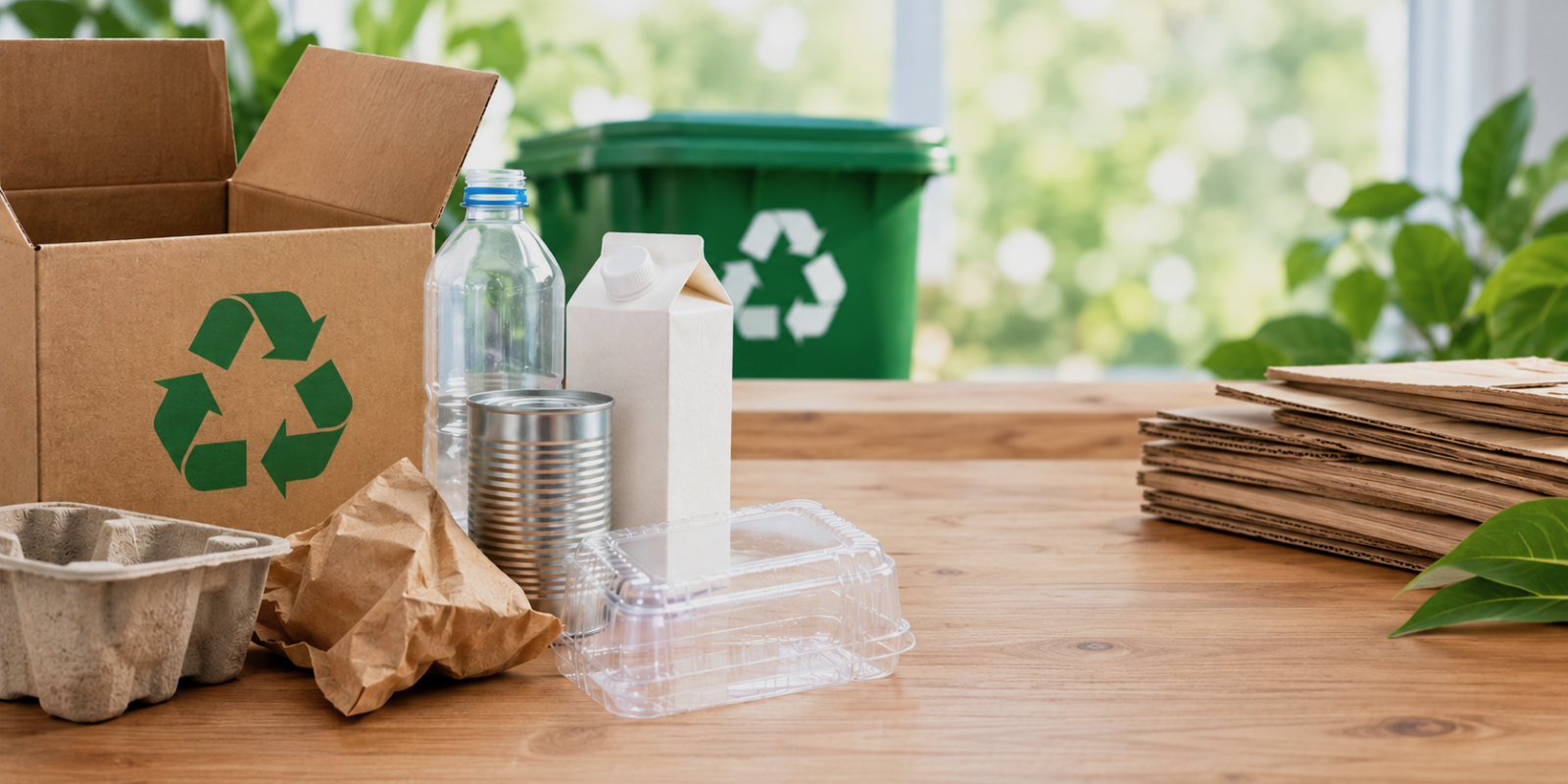
Many of the obligations already apply, but most will be phased in up to the year 2040. The Regulation applies to packaging placed on the market from August 12th, 2026, onward; packaging placed on the market before then does not have to be withdrawn from the market in case of non-compliance with the Regulation.
The Regulation distinguishes between packaging manufacturers and packaging producers, with economic operators often falling within both categories (see below).
1. OBLIGATIONS OF PACKAGING MANUFACTURERS
A manufacturer is anyone who manufactures packaging or a packaged product, or anyone who has packaging or a packaged product designed or manufactured under their own name or trademark, with the exception of micro-enterprises. The packaging manufacturer will therefore typically also be the brand owner of the packaged product, not merely the entity that physically manufactures the packaging.
Under the PPWR, the packaging manufacturer is required to demonstrate that individual packaging items meet technical requirements and to issue an EU declaration of conformity with these requirements.
1.1 EU Declaration of Conformity
Starting August 12th, 2026, packaging manufacturers are required to issue an EU declaration of conformity for their packaging in accordance with Article 39 of the PPWR. Its prescribed form can be found in Annex VIII to the Regulation (see links to Czech and English-language versions). A single declaration covering all packaging does not suffice; instead, a separate declaration must be issued for each type or homogeneous group of packaging. If packaging consists of several components (e.g. a bottle, closure and label), a single declaration is enough, but it must cover all components of that packaging unit. Individual types of packaging (for sale, grouped units, and for transport) are assessed separately.
The declaration must confirm that the packaging does, in fact, conform to current PPWR requirements. By issuing the declaration, the manufacturer assumes legal liability for the conformity of the packaging, even if the declaration is based on information provided by its suppliers. It is therefore advisable to actually verify conformity before signing the declaration.
If the packaging does not meet the PPWR requirements, the packaging manufacturer is required to take corrective action and, where appropriate, withdraw such packaging from the market, as well as inform the appropriate authorities.
1.2 Technical Documentation
The EU declaration of conformity is based on technical documentation as outlined in Annex VII of the PPWR. For each packaging type, it should mainly include a description of the packaging and its intended use, the materials and components used, test results or supplier confirmations, and justification for its conformity with individual PPWR requirements.
Technical documentation need not always be attached to the declaration. The manufacturer is, however, required to retain such documentation and make it available to competent authorities upon request. The declaration and supporting technical documentation must be retained for five years after the packaging has entered the market, or ten years in the case of reusable packaging.
Manufacturers need not always provide their own laboratory tests in order to demonstrate compliance with the current requirements. Declarations from packaging suppliers, in particular confirmations concerning heavy metals and, for food packaging, PFAS, together with material specifications, will usually suffice, provided that they contain the necessary measured values and provided the supplier carries out such tests or has such tests carried out. We recommend requesting these supporting documents from your packaging suppliers and issuing the EU declaration of conformity on their basis. Suppliers of packaging and packaging materials are required to provide the manufacturer with all information and documentation necessary to demonstrate conformity (according to Article 16 of the PPWR).
1.3 Declaration of Conformity: Requirements Already Applicable from August 12th 2026
For many general requirements under the PPWR, specific limits and values have yet to be established through Commission´s implementing acts. For the time being, it is therefore only necessary to declare (and prove) conformity with those requirements that already apply — i.e. those arising directly from the text of the Regulation, from existing ČSN EN/ISO standards, or from available technical supporting documents. At present, the following items in particular need to be confirmed in any EU declaration of conformity and proven in the technical documentation:
- Heavy metals
- PFAS
- Substances of concern
- Reusable packaging
- Void fillers
- Package Labelling
Starting August 12th, 2026, the following must be indicated clearly and legibly on the packaging in accordance with the PPWR:
- type, batch, serial number or other identifier of the packaging;
- name or trademark of the packaging manufacturer;
- the postal address and, where applicable, an electronic means of contacting the packaging manufacturer;
- procedures ensuring that series production remains in conformity.
The manufacturer’s details may also be provided by means of a QR code or in a document accompanying the packaging. Similarly, the importer must indicate its details on the packaging and, before making the packaging available on the EU market, the distributor must verify that the packaging bears these details and that the producer is registered in the register of producers. The manufacturer must also have procedures in place to ensure that series production remains in conformity.
2. OBLIGATIONS OF PACKAGING PRODUCERS
A packaging producer is anyone who makes a certain packaging (or packaged product) available on the market of a particular Member State for the first time. This may be a manufacturer, importer, distributor or an online shop selling remotely. In general, under the PPWR, the packaging producer is required to ensure registration, record-keeping, financing, return and recovery of packaging waste in each Member State to which it supplies packaging — the precise procedures and rules may differ between Member States. A producer supplying packaging or packaged products directly to end users in another Member State in which it is not established must appoint an authorized representative for extended producer responsibility in that Member State.
In the Czech Republic, Act No 477/2001 Coll. on Packaging continues to apply to the extent that certain matters are not directly addressed by the PPWR, which now mainly imposes the following obligations on packaging producers:
- ensure prevention and compliance with requirements under Sections 3 and 4;
- have technical documentation and demonstrably provide information to clients;
- ensure the return and recovery of packaging waste;
- fulfil these obligations individually, by transferring them to another person or through an authorized packaging company;
- be entered in the List of Persons unless fulfilling the obligations through an authorized packaging company;
- keep ongoing records, report data, and retain documents for at least five years.
In the Czech Republic, most of these obligations, including registration, can be fulfilled through the authorized packaging company EKO-KOM, a.s. If you already work with EKO-KOM, a.s., the key obligations that remain to be monitored internally are:
- prevention and source reduction — keeping the weight and volume of packaging as low as possible so that it performs only the necessary protective and logistical functions;
- restrictions on heavy metals — having documentation (like supplier certificates) demonstrating that the sum of the concentrations of lead, cadmium, mercury and hexavalent chromium does not exceed 100 mg/kg;
- technical documentation — providing documentation upon request to the inspection authorities (like the Czech Trade Inspection Authority or the Czech Environmental Inspectorate) and demonstrating that the packaging meets the statutory standards.
These requirements overlap, however, with the requirements under the PPWR, and must also be stated and proven in the EU declaration of conformity.
3. PRACTICAL RECOMMENDATIONS
- What to do now: request supporting documents from suppliers and issue EU declarations of conformity for all packaging placed on the market; verify that packaging intended to come into contact with food complies with the PFAS guidelines, add the manufacturer’s and importer’s identification details to the packaging/documentation, remove void fillers, and check whether any reusable packaging meets the reusability requirements under Article 11 PPWR.
- Exercise caution when considering investments where the final methodology is not clear: requirements concerning label design, precise documentation of recycled content and design for recycling according to grades A/B/C will continue to change depending on the final implementing acts of the European Commission.
- Monitor on an ongoing basis: keep up with the timetable for the adoption of Commission´s implementing acts, with any decisions on a possible deposit and return system in the Czech Republic, and with the preparation of an amendment to the Packaging Act adapting it to the Regulation.
- Plan ahead for 2030: bans on selected single-use packaging, re-use targets for transport packaging and beverages, mandatory percentage of recycled content in plastic packaging and the obligation to minimize packaging require a review of packaging portfolios and renegotiation of contracts with packaging suppliers sufficiently far in advance.
- Food service and takeaway: prepare for the obligation to fill customers’ own containers with beverages and food (from February 12th, 2027) and to offer reusable packaging (from February 12th, 2028).
- For specific packaging formats and product lines, we recommend an individual legal assessment, particularly with regard to potential exemptions (protected designs, geographical indications, packaging for sensitive products, medical devices, medicinal products).
4. SOURCES
Regulation (EU) 2025/40 of the European Parliament and of the Council of December 19th, 2024, on packaging and packaging waste, amending Regulation (EU) 2019/1020 and Directive (EU) 2019/904, and repealing Directive 94/62/EC (OJ L, 2025/40, January 22nd, 2025).
Commission Notice — Guidance on Regulation (EU) 2025/40 on packaging and packaging waste, C(2026) 3702, published in OJ C/2026/3084 on June 10th, 2026; Commission Frequently Asked Questions on the PPWR (2nd edition, August 2026).
Additional sources for verifying the current status of implementing acts and Czech practice (publicly available sources as at the date of preparation, October 2026): websites of the Ministry of the Environment of the Czech Republic, EKO-KOM, a.s., the Czech Trade Inspection Authority, the Czech Chamber of Commerce, and the Czech Confederation of Commerce and Tourism.
Would you like to have an overview of the main obligations under the PPWR which are yet to be phased in and the deadlines for the adoption of the legislation setting forth their specific content?
Do not hesitate to contact us with specific questions concerning the impact of the PPWR on your business.
This update was prepared for you by Mgr. Eliška Mikešová.